Axolotl Care Guide for Beginners
A complete beginner-friendly axolotl care guide covering tank setup, water, feeding, health and common mistakes.
 Axolotl Wise
Axolotl Wise answers the questions new keepers actually search: tank size, cycling, water temperature, food, substrate, tank mates, illness signs, morphs, regeneration and conservation.
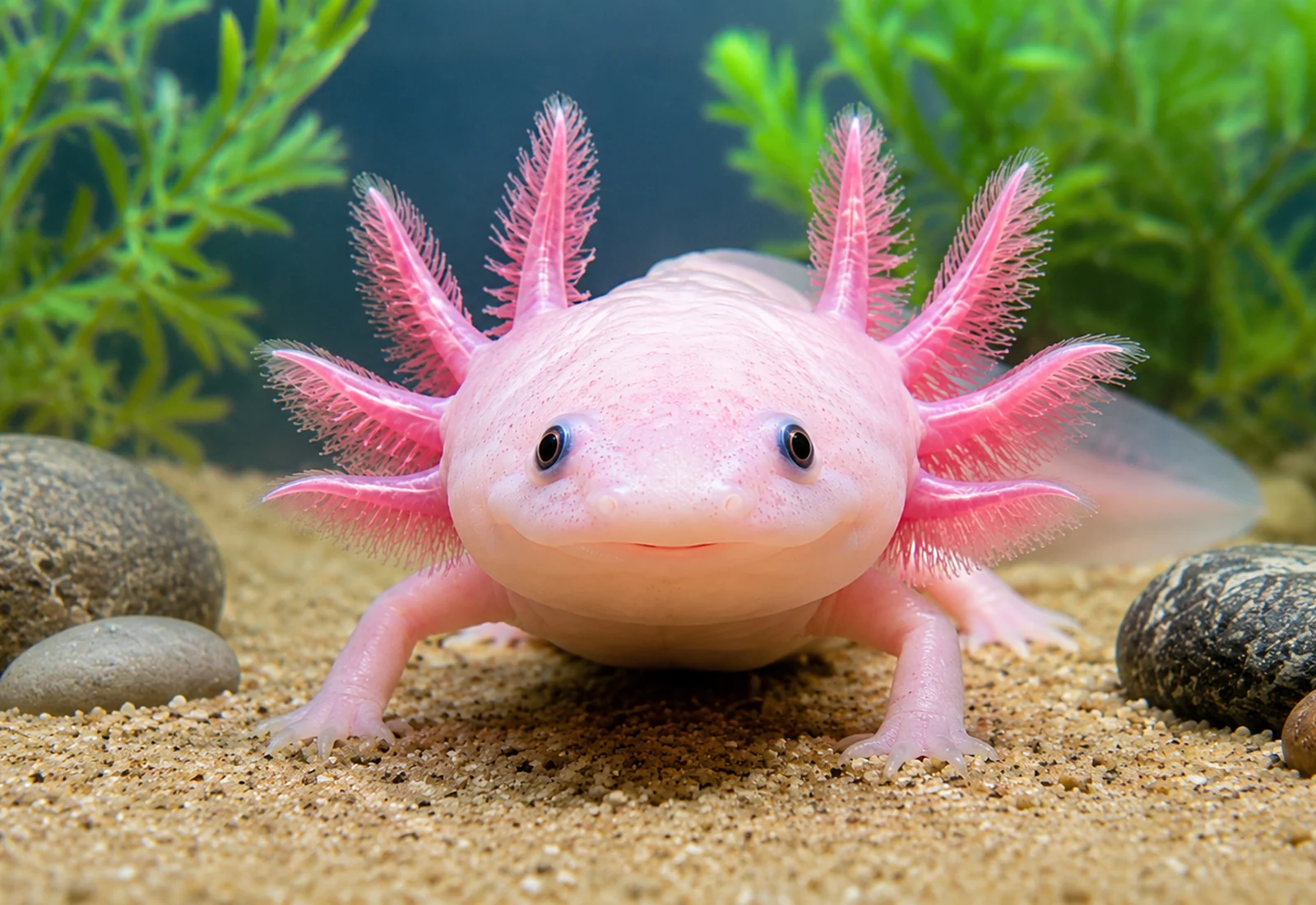
A complete beginner-friendly axolotl care guide covering tank setup, water, feeding, health and common mistakes.
Learn how to set up an axolotl tank with the right size, filter, hides, substrate, cooling and lighting.
Safe axolotl water parameters explained: temperature, ammonia, nitrite, nitrate, pH, hardness and water changes.
A beginner-friendly fishless cycling guide for axolotl tanks with ammonia, nitrite, nitrate and safe readiness checks.
Axolotl feeding guide for adults, juveniles and picky eaters, including earthworms, pellets and foods to avoid.
Common axolotl health signs explained: curled gills, floating, fungus, not eating, injuries and when to call an exotic vet.
Guide to common axolotl morphs: wild type, leucistic, golden albino, melanoid, copper and GFP genetics basics.
Interesting axolotl facts about biology, neoteny, habitat, regeneration and common myths.
Beginner-friendly explanation of axolotl regeneration science, blastema formation and why researchers study them.
Tools are conservative and educational. They do not replace an exotic-animal veterinarian.
Enter temperature, ammonia, nitrite, nitrate and pH to get a conservative care interpretation.
Estimate whether your aquarium volume is in the safe zone for one or more axolotls.
Generate a starting feeding rhythm for juveniles, adults and older axolotls.
The site uses one crawlable page per question, short answers first, structured data, practical checklists and strong internal links. Visitors see helpful content — not technical SEO labels.
An axolotl is a fully aquatic salamander, not a fish. It is famous for external gills, a larval-looking adult form and remarkable regeneration.
No. Axolotls are amphibians—specifically salamanders—even though they live underwater.
Axolotls can be rewarding pets, but they are not low-maintenance beginner pets unless you are prepared for cold, tested, cycled water.
With proper care, many axolotls live roughly 10 years or more; poor water and heat can shorten lifespan dramatically.
Adult axolotls commonly reach around 9–12 inches, with some individuals larger or smaller.
Axolotls are carnivores. Earthworms are a top staple for many adult axolotls, with quality pellets as a useful supplement.
Many healthy adult axolotls eat every 2–3 days, while juveniles usually need smaller meals more often.
Use 29 gallons / 110 liters as a conservative minimum for one axolotl, and choose a 40 gallon breeder-style tank when you can.
A safe everyday target is around 60–68°F / 16–20°C. Avoid prolonged warm water.
Aim for 0 ammonia, 0 nitrite, low nitrate, stable pH and cool water.
Cycle the tank fishlessly before the axolotl arrives by growing bacteria that convert ammonia to nitrite and nitrate.
Usually no. Fish can nip gills, carry disease or become dangerous food inside the axolotl.